Bypass Turnitin AI Detection — Get a 100% Human Score Every Time
What Is Turnitin's AI Detection — and Why Is It So Hard to Beat?
Turnitin launched its AI detection feature in 2023, and it has since become the most widely used academic AI detector in the world — integrated into over 16,000 institutions, covering more than 71 million students. But unlike its plagiarism scanner, which compares your text against a database of existing content, the AI detection module works very differently.
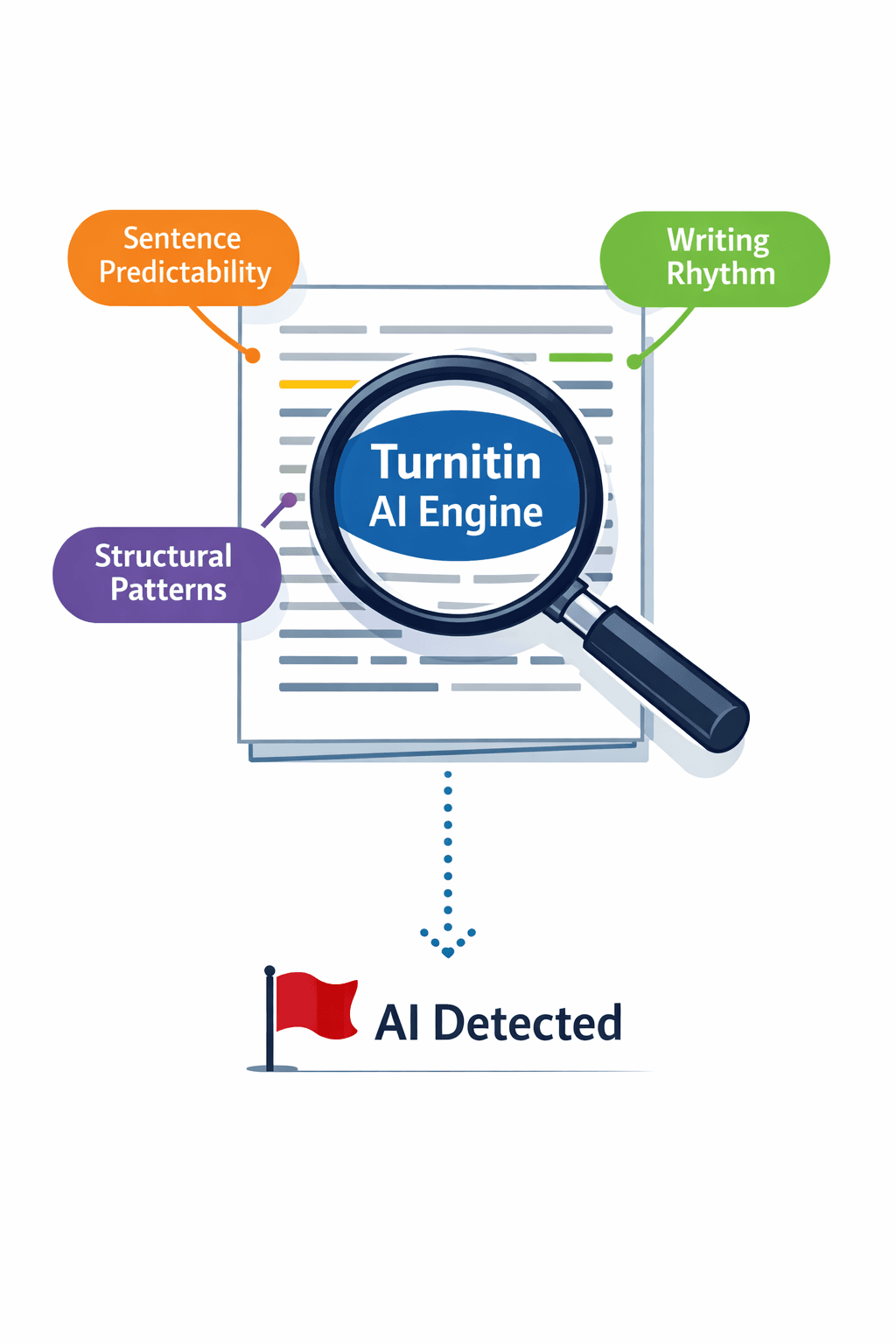
It doesn't look for copied text. It analyzes your writing behavior — the statistical fingerprints that large language models like ChatGPT, Claude, and GPT-4 consistently leave behind. Specifically, Turnitin's model evaluates:
Sentence-level predictability
AI models generate text by choosing the most statistically probable next word at every step. That produces unusually clean, smooth sentences that rarely surprise the reader. Turnitin recognizes that pattern.
Uniform writing rhythm
Human writers vary their sentence length and complexity in ways that are genuinely irregular. AI writing maintains consistent rhythm across paragraphs. Turnitin flags that consistency.
Repetitive structural logic
AI tends to organize every paragraph the same way: introduce, support, conclude. Real writers circle back, contradict themselves occasionally, and shift their approach mid-argument. Turnitin's model is trained to spot the structural uniformity of AI.
Low-entropy transitions
Words like "Furthermore," "Additionally," and "Moreover" appear at predictable intervals in AI text. Human writers use transitions less mechanically. Turnitin tracks these transition patterns.
Here's the thing that catches most students off guard: even heavily edited AI drafts often still fail Turnitin. In independent testing, content run through QuillBot's paraphraser before submission typically still scores 72–85% AI on Turnitin's detector. Paraphrasing changes words — it doesn't change writing behavior. You need something that changes the behavior itself.
That's what we do.
Turnitin's 2025 Update: AI Bypasser Detection
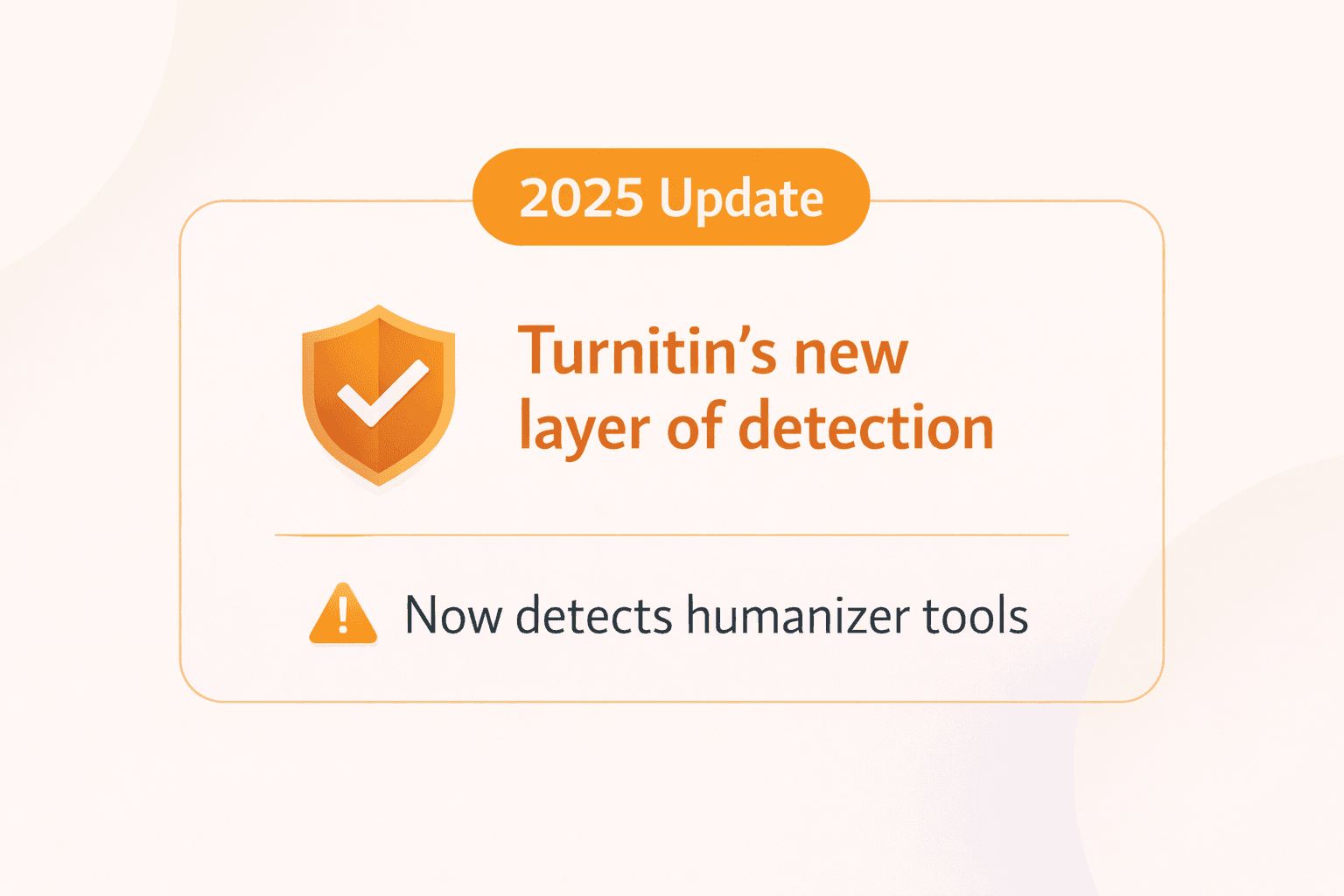
In August 2025, Turnitin rolled out a significant update: AI bypasser detection. This new capability is designed specifically to catch content that has been processed by humanizer tools — not just raw AI output. Turnitin described it as a response to the growing use of tools that "disguise AI-generated text as human-written."
This is a real challenge, and we won't pretend otherwise. It means that basic humanizers — tools that do surface-level synonym replacement or light paraphrasing — are increasingly likely to be caught. Turnitin's updated model can now recognize patterns left behind by popular bypass tools.
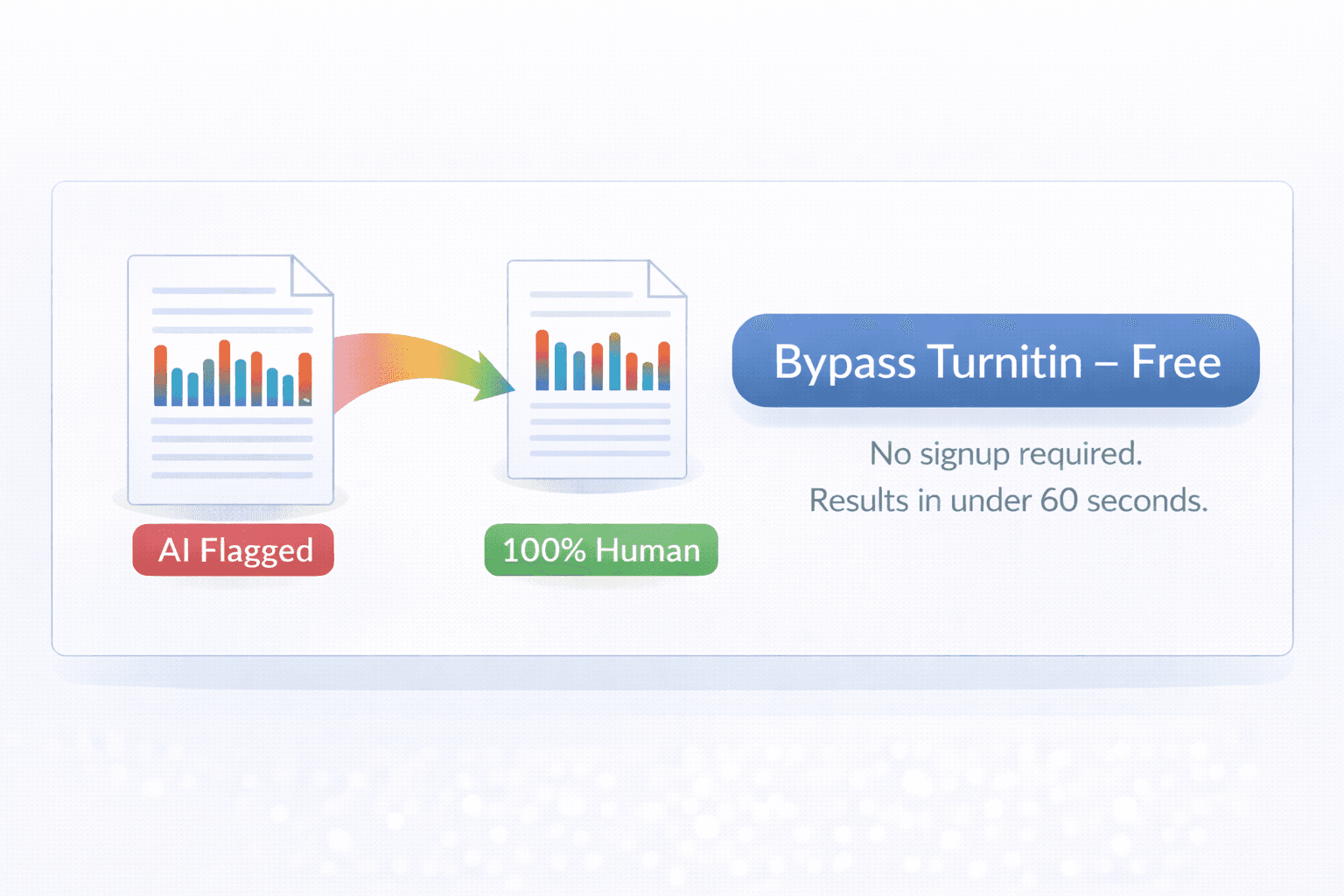
Our engine is updated continuously in response to exactly these kinds of detection changes. We monitor Turnitin's model behavior, test our output against each new iteration, and adjust our rewriting algorithms accordingly. The structural changes we apply go deeper than what Turnitin's bypasser detection is currently trained to identify — because we're not just masking AI text, we're reconstructing it at the level Turnitin evaluates.
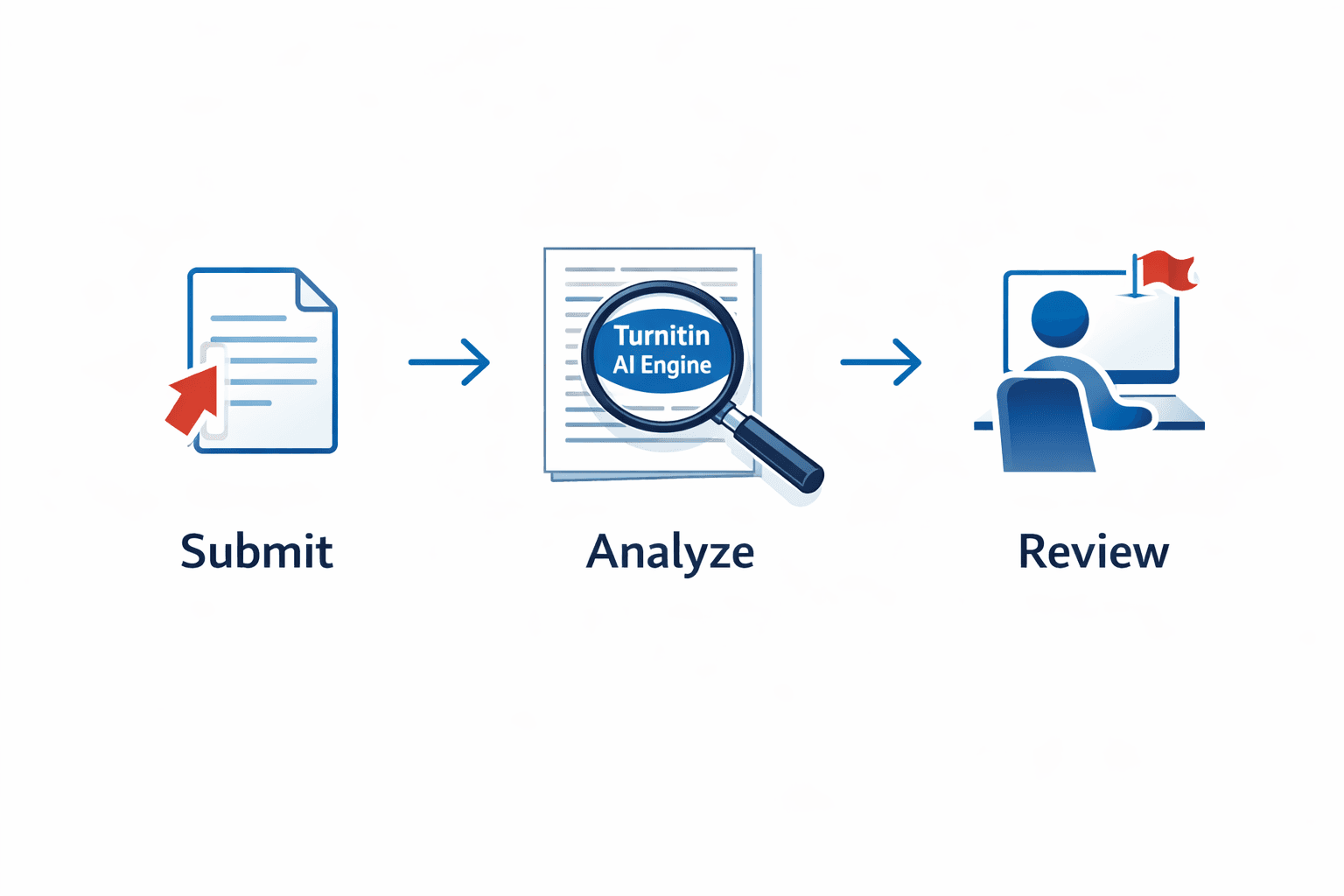
How to Bypass Turnitin in 3 Steps
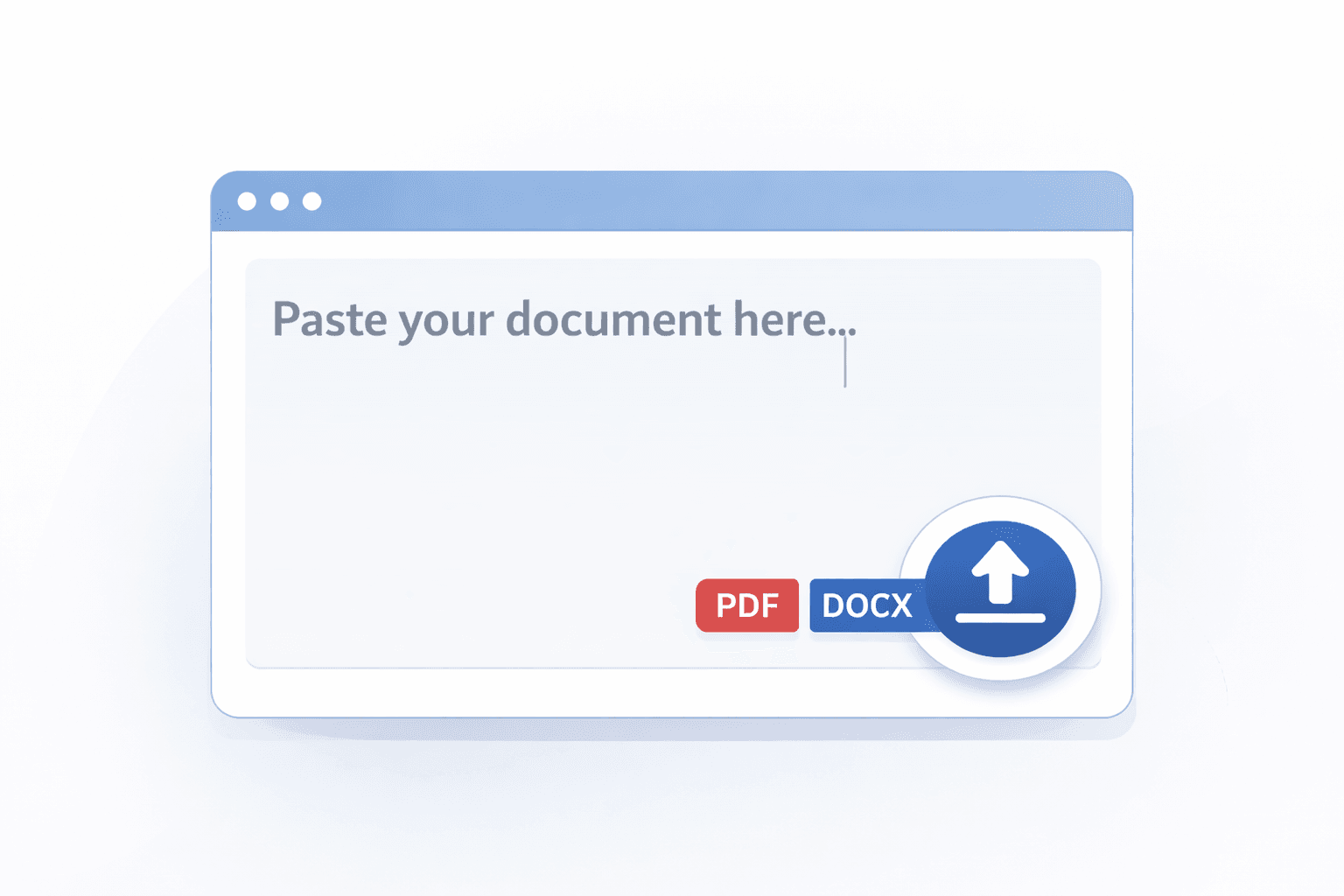
Step 1 — Paste Your Text or Upload Your Document
Drop your AI-generated content directly into the text box — anything from a single paragraph to a 10,000-word dissertation. If you'd rather not copy and paste, upload your document directly. We support PDF and Word (.docx) files, and your formatting comes back exactly as it went in: headers, citations, tables, footnotes — all intact. This matters especially for academic submissions. You don't want to spend an hour reassembling your document after humanization. You shouldn't have to.
Step 2 — Choose the Right Humanization Mode
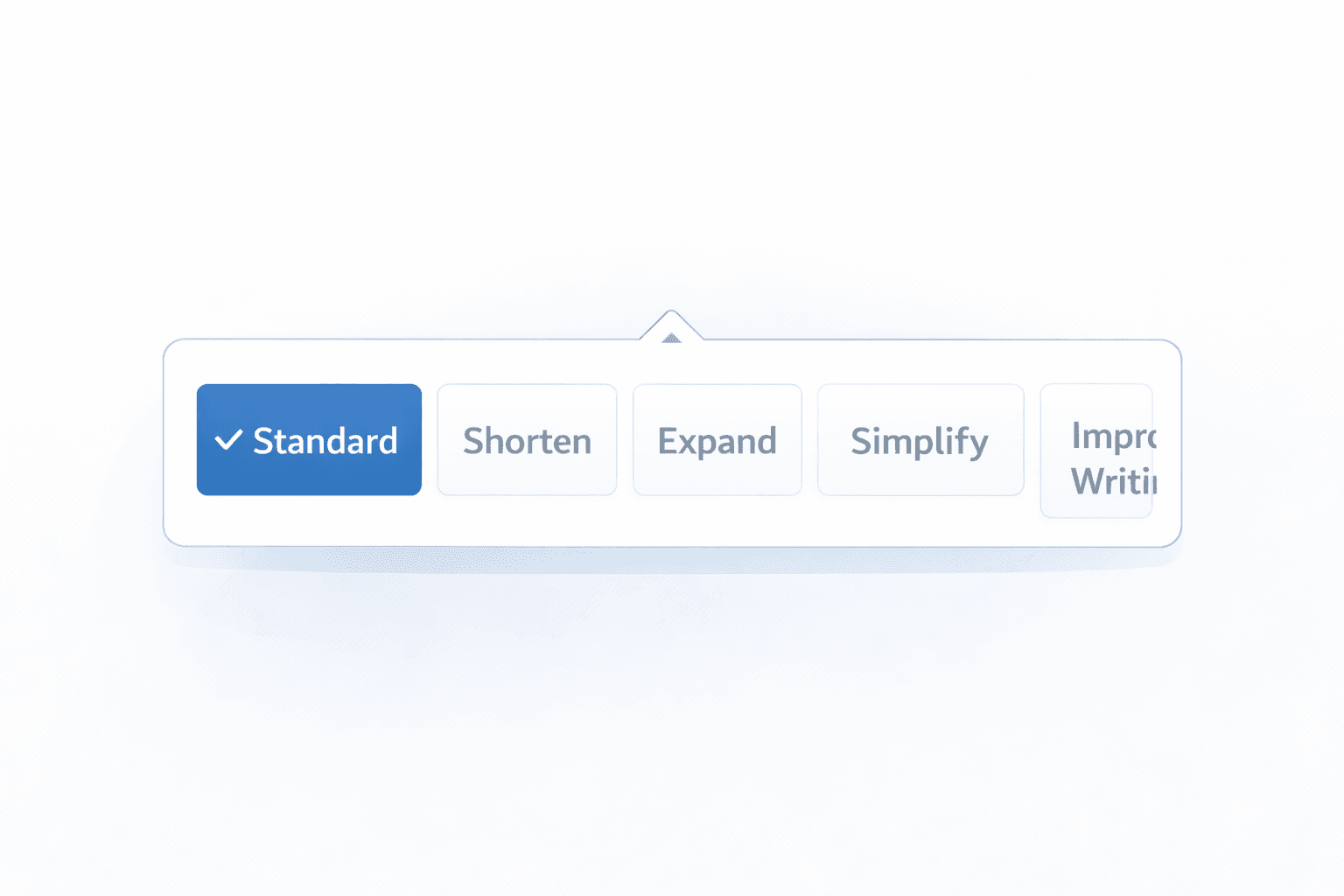
Pick the mode that fits what your content needs: Standard — rewrites your AI draft into natural human-sounding writing. The right starting point for most essays, research papers, and reports. Shorten — trims your content while keeping every key point. Good when you're over a word limit. Expand — adds depth and substance where the original draft feels thin. Simplify — makes complex ideas clearer and more readable. Helpful when technical jargon is contributing to AI-like phrasing. Improve Writing — goes further than humanizing. It polishes grammar, tightens flow, and fixes awkward constructions throughout. Best for content that needs to be submission-ready without a manual editing pass. For academic writing, Standard or Improve Writing are the go-to options.
Step 3 — Check Your Score and Submit With Confidence
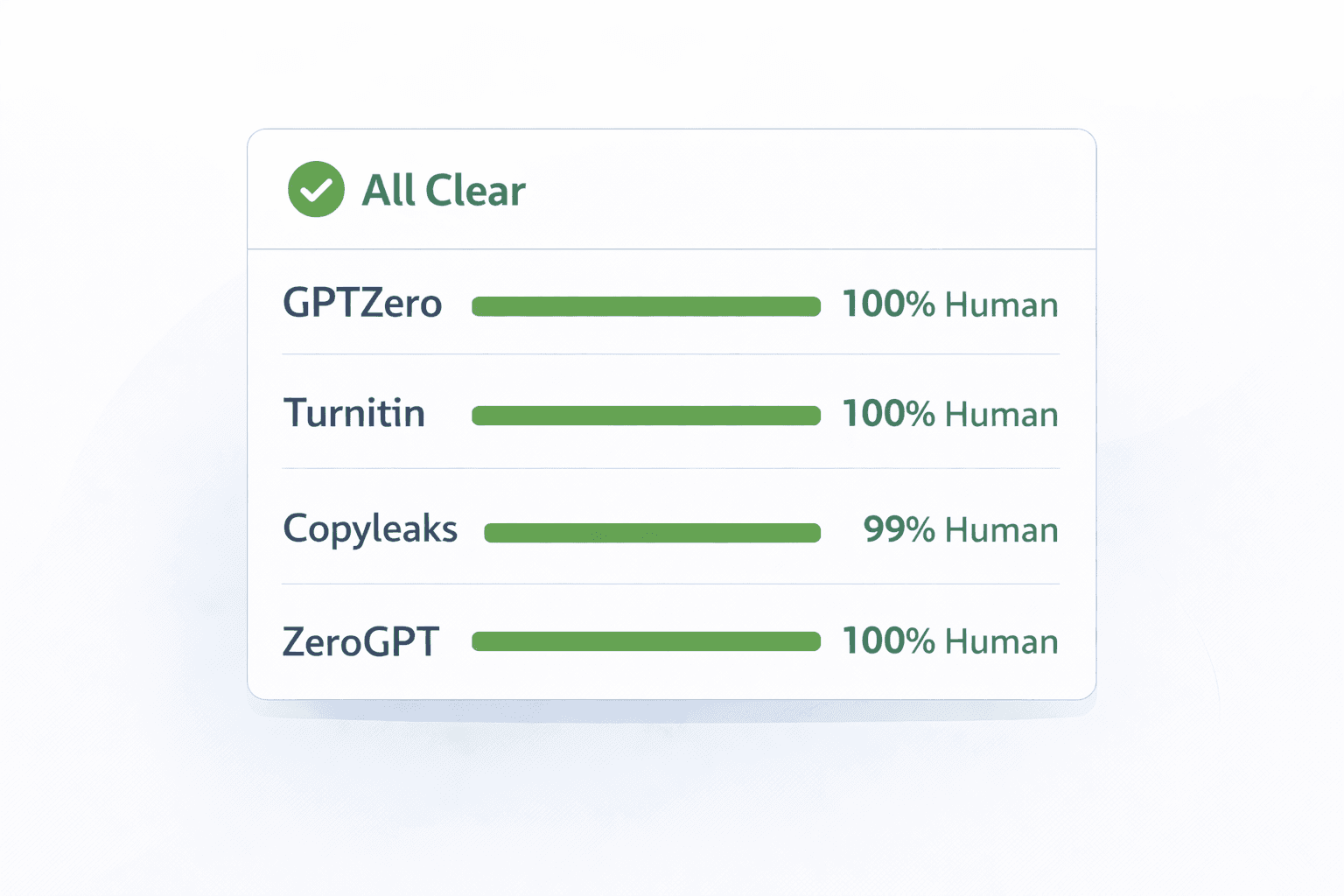
Once the rewrite is done, run your output through our built-in AI Detector before you submit anything. You'll see your score across Turnitin, GPTZero, Copyleaks, ZeroGPT, and other major detectors — all in one place, without leaving our tool. Most content hits a 99–100% human score on the first pass. If anything needs a second run, you'll see exactly which sections to target. Submit once you're satisfied. The whole process, from paste to submission-ready, typically takes under two minutes.
Why Standard Paraphrasing Doesn't Work on Turnitin
This is the most common mistake students make. They run their ChatGPT essay through QuillBot or another paraphraser, figure the words are different enough, and submit. Then Turnitin still flags it at 75% AI.
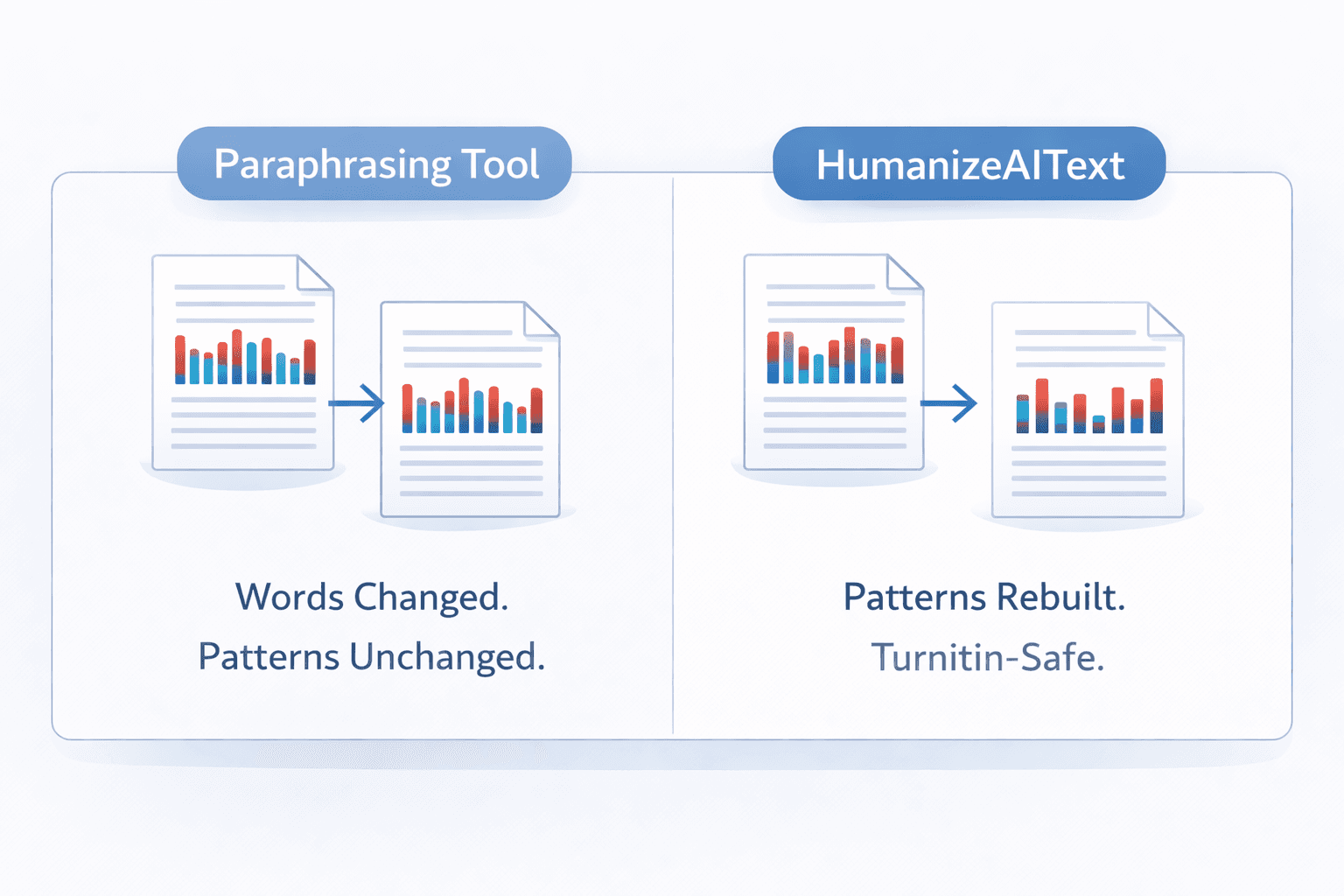
Why? Because QuillBot changes vocabulary. It doesn't change writing behavior. And Turnitin doesn't care about vocabulary — it evaluates statistical patterns in how you write, not specifically what you wrote. The entropy levels, sentence length variation, transition predictability, and structural logic all survive a paraphrasing pass essentially unchanged.
Our rewriting engine is built to address the things paraphrasers don't touch:
Sentence entropy
we vary word predictability across your text so consecutive tokens don't follow the probability distribution AI models produce.
Burstiness
we introduce genuine variation in sentence complexity. Short sentences. Longer ones that unfold across multiple clauses. The kind of rhythm that real writing has.
Transition behavior
we reduce mechanical transition phrases and replace them with the kind of natural, sometimes abrupt, sometimes digressive connections that characterize human writing.
Paragraph-level structure
we vary how ideas are introduced and concluded within each paragraph, so Turnitin's structural logic analysis doesn't find the AI's characteristic repetitive format.
The output passes Turnitin because the underlying writing patterns have actually changed — not because we've given it a new coat of paint.
Who Needs to Bypass Turnitin — and Why
Students and Academic Writers
Turnitin flags more student work every semester, and not always because AI did the writing. Students who use AI to brainstorm, generate an outline, get a rough draft unstuck, or clean up grammar in their own writing all risk triggering a false positive — especially if they don't do a deep enough manual revision afterward. Our tool is built for exactly this scenario. You did the thinking. You wrote the argument. The AI just helped you get words on the page faster. Our humanizer removes the fingerprints that drafting tool left behind, so what Turnitin sees is a text that reads like you sat down and wrote it from scratch — because structurally, that's now what it looks like. It handles everything from undergraduate essays to doctoral dissertations. Upload the full document, get it back with formatting intact, and submit knowing your score will come back clean.
ESL Students and Non-Native English Writers
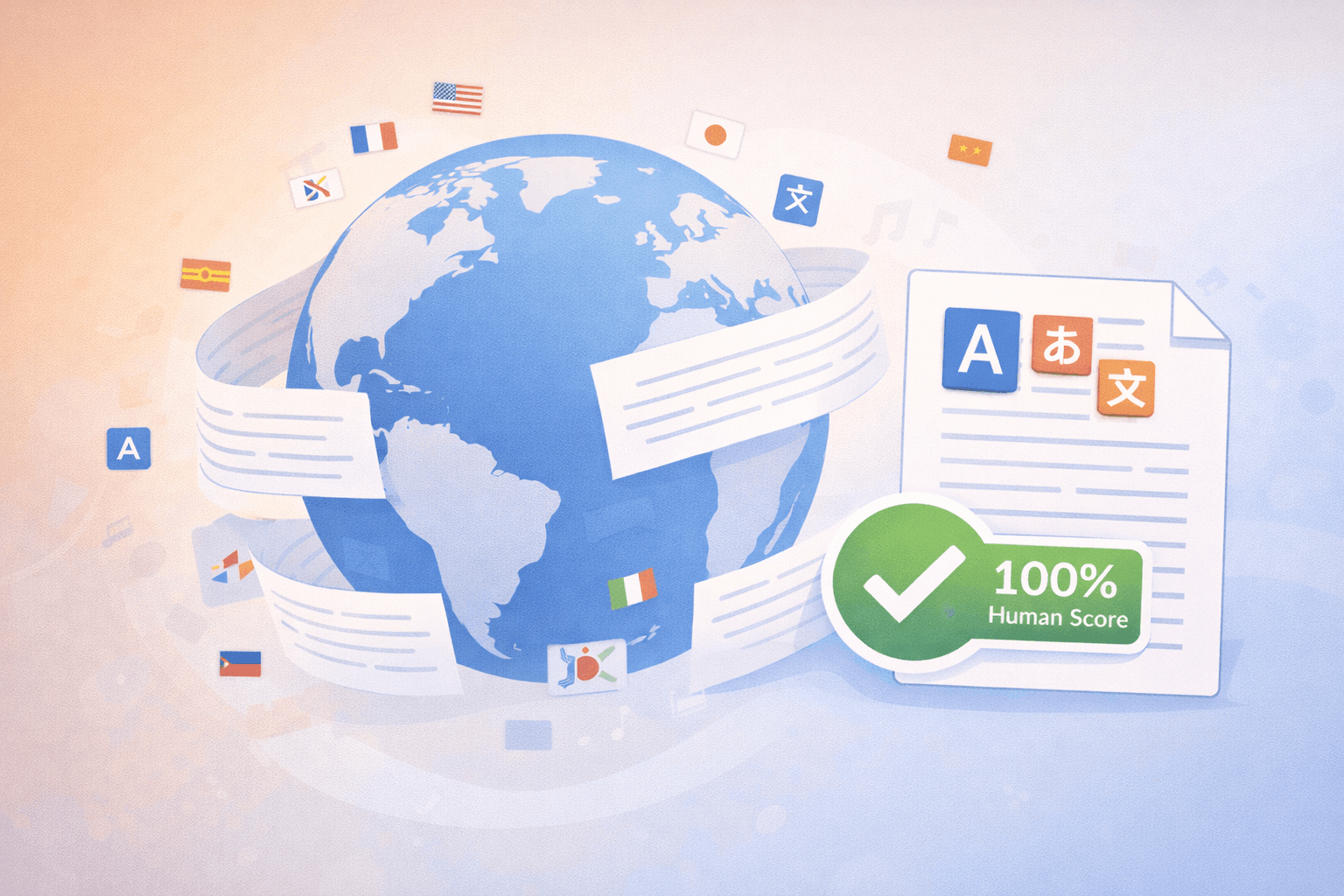
ESL students face a particularly unfair challenge. Non-native English writing patterns can sometimes trigger Turnitin's AI detection — not because AI wrote it, but because structured, formal, second-language writing shares surface characteristics with AI-generated text. We support 30+ languages, and our humanizer adjusts writing patterns specific to each language — not just translating English humanization techniques across other languages. ESL students using our tool see genuine improvement in how their writing reads, and the Turnitin score clears because the patterning that was triggering the false positive has been resolved.
Graduate Researchers and Thesis Writers
Graduate theses and dissertations represent months or years of original research. Having that work flagged by a blunt AI detection model — because you used AI to help draft transitions or polish technical descriptions — is an outcome that can derail a defense or delay graduation. Our tool handles long-form documents cleanly. Upload the full thesis, and the humanization runs across the entire document while preserving your academic structure: abstract, methodology, results, references, appendices. The file that comes back is formatted for submission. Nothing is out of place.
Researchers and Academic Professionals
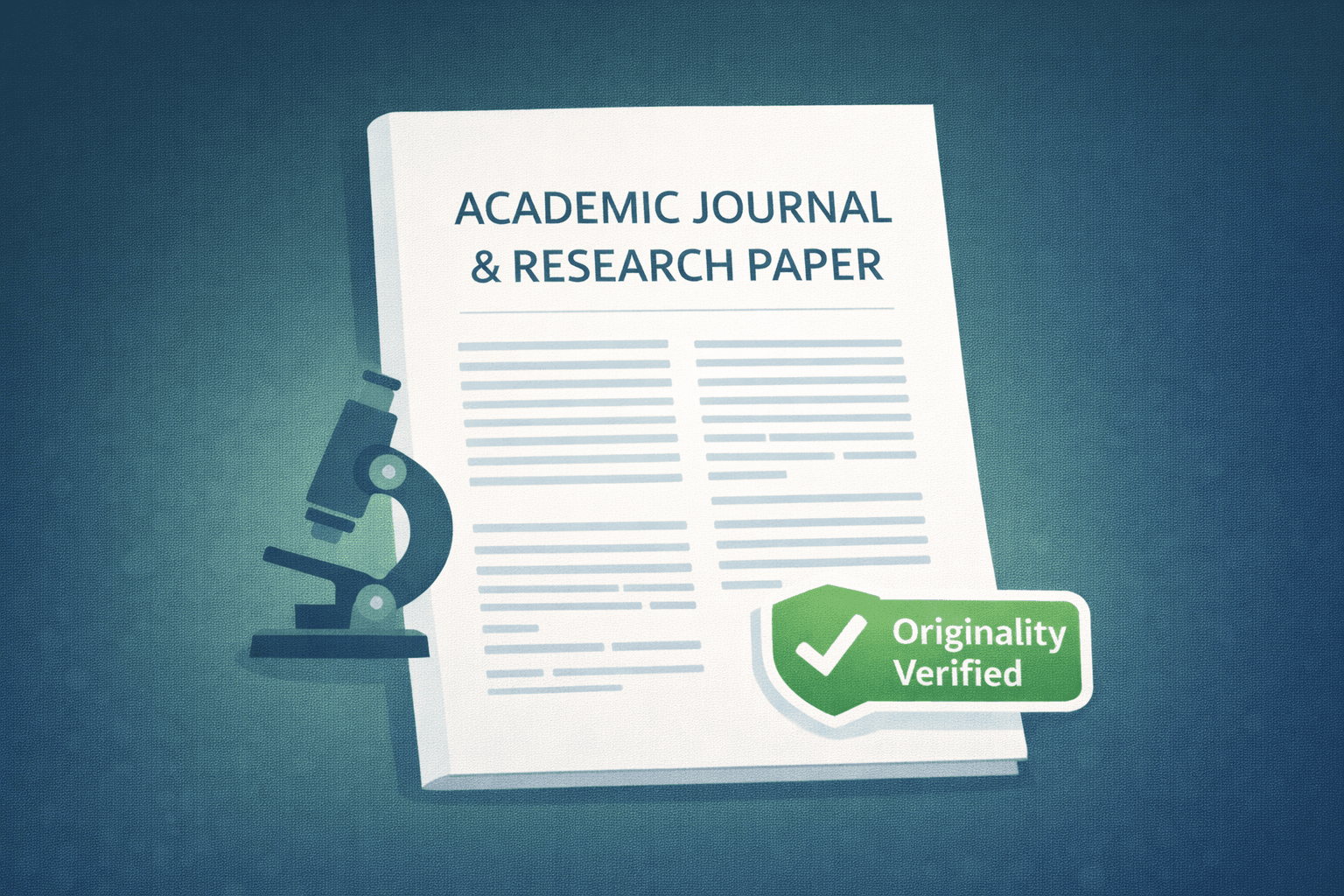
Academic publishing and grant applications increasingly run content through AI detection as part of editorial review. Researchers who use AI for drafting literature reviews, structuring methodology sections, or generating early-stage content need clean output before submission — not a flag during peer review. Our tool integrates into the workflow without disruption. Process sections individually or upload the full paper, and get humanized output that reads naturally while passing whatever AI detection the journal or funder is running.
Key Features Built for Turnitin Bypass
Deep Structural Rewriting — Not Surface Paraphrasing
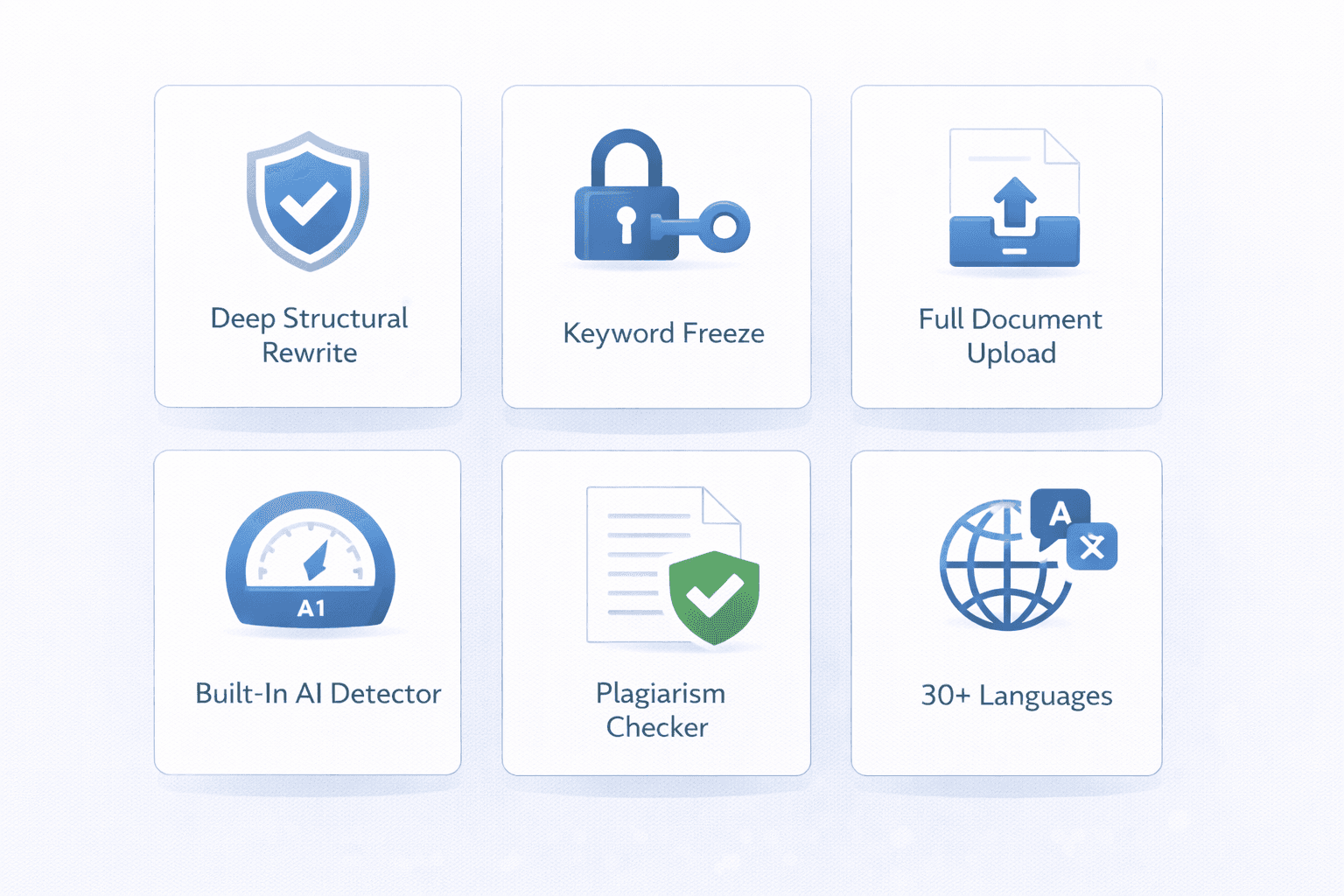
We go beyond swapping synonyms. Our engine changes sentence structure, word entropy, transition behavior, and paragraph logic — the specific patterns that Turnitin's model evaluates. The output isn't just different words. It's different writing behavior.
Keyword Freeze — Keep Technical Terms and Citations Intact
Academic writing is full of terminology that can't be changed: methodology names, medication names, legal terms, cited author names, technical vocabulary. Use keyword freeze to lock those terms before running humanization. We rewrite everything around them, leaving your academic precision untouched.
Full Document Upload — PDF and Word Support
Upload your complete essay, thesis, or research paper in PDF or Word format. The humanized content comes back in the same file, with your formatting preserved: heading hierarchy, citation formatting, tables, footnotes, and figures all exactly where you left them.
Built-In AI Detector — Verify Before You Submit
Check your humanized output against Turnitin, GPTZero, Copyleaks, ZeroGPT, and other major detectors directly in our tool. See your human score before you submit to anything. No guessing, no submitting blind.
Plagiarism Checker — Confirm Originality Alongside Detection
Humanized content is original — it's not copied from any source. But if you want confirmation before submitting somewhere that runs both AI detection and plagiarism scanning, our built-in Plagiarism Checker gives you that. One step to confirm everything is clean.
Regularly Updated Against Turnitin's Evolving Detection
Turnitin updates its AI detection model — including its bypasser detection capability rolled out in 2025. We update our rewriting engine in response. Our output is tested against each new Turnitin iteration before we ship, so you're always bypassing the current version, not last year's.
Real Results Across Turnitin Use Cases
"I used ChatGPT to help me structure my dissertation chapters during a really rough patch. My advisor flagged the first draft immediately. I ran it through HumanizeAIText and resubmitted — clean score, no flags, same arguments I'd built over two years." — PhD candidate, UK
"As an international student, my English sometimes hits the same patterns AI uses. I kept getting flagged for essays I genuinely wrote myself. This tool fixed that problem the first time I used it." — Master's student, Germany
"We run all our research assistant's drafts through this before they go to the journal. Saves us hours of manual editing and the output is consistently clean on Turnitin." — Academic researcher, Canada
Frequently Asked Questions About Bypassing Turnitin
How does Turnitin's AI detection work in 2025?
Turnitin's AI detection analyzes statistical writing patterns — specifically sentence predictability, rhythm consistency, transition behavior, and structural logic. It doesn't match your text against a database. It evaluates whether your writing behavior matches the output of large language models like ChatGPT. In 2025, Turnitin also added bypasser detection, designed to catch content processed by humanizer tools.
Does Turnitin detect ChatGPT-generated text?
Yes. ChatGPT text produces highly consistent statistical patterns — smooth sentence flow, predictable word choices, uniform structure — that Turnitin's model is specifically trained to identify. Even heavily edited ChatGPT drafts often still score high for AI if the editing was done manually without structural change.
Does humanizing text actually bypass Turnitin?
It depends on how deeply the humanization changes the text. Basic paraphrasers change words but leave the underlying writing patterns intact — and Turnitin still catches it. Our tool changes the writing patterns themselves: sentence entropy, burstiness, transition behavior, and structural logic. That's what Turnitin actually evaluates, and that's what we change.
Will Turnitin catch QuillBot rewrites?
Often, yes. Independent testing shows QuillBot-processed AI content typically still scores 72–85% AI on Turnitin's detector. QuillBot paraphrases at the word level, not the structural level. Turnitin's model is evaluating structure.
Does Turnitin flag false positives on human-written work?
Yes, it does — and Turnitin has acknowledged this. Their own figures suggest they intentionally let around 15% of AI-generated text go unflagged to keep the false positive rate manageable. ESL writers, students with formal writing styles, and people who use AI for light editing are all at higher risk of a false positive. Our tool helps resolve that by making the writing behavior cleaner and more naturally varied.
What is Turnitin's AI bypasser detection, and does your tool still work against it?
Turnitin launched AI bypasser detection in August 2025, designed to identify content modified by humanizer tools. We update our rewriting engine continuously in response to Turnitin's evolving detection methods. Our current output is tested against Turnitin's 2025 model, including the bypasser detection update, before release.
Is bypassing Turnitin's AI detection ethical?
That depends on how you use it. If you wrote the ideas, built the argument, and did the thinking — and you're using our tool to clean up the AI fingerprints left by a drafting tool — you're still the author. The content is yours. If you submitted entirely AI-generated work as your own, that's a different matter. We built this tool for writers cleaning up legitimate work, not for generating essays from scratch.
How do I lower my Turnitin AI score without rewriting everything manually?
Paste your content into our AI Humanizer, choose Standard or Improve Writing mode, and run the humanization. Then check your score with our built-in detector before submitting. That's it. Most users see a 99–100% human score on the first pass, without touching a single word manually.
Does humanized content also pass Turnitin's plagiarism check?
Yes. Humanized output is fully rewritten — it doesn't pull from any external source or recycle existing content. It passes Turnitin's plagiarism scanner, not just the AI detection module. Use our built-in Plagiarism Checker to confirm before submitting if you want extra assurance.
Is this free to use?
Yes. You can use our Turnitin bypass tool without creating an account or entering payment details. The free plan gives you immediate access to humanization and the built-in AI Detector. Paid plans unlock higher word counts per run, faster processing, and full-document batch support.
Don't Let Turnitin Flag Work That's Genuinely Yours
Turnitin is a blunt instrument. It doesn't know how much of that draft you wrote yourself, how much AI helped, or how many hours you spent revising. It just looks at patterns — and flags what looks statistical.
Our tool changes the patterns. Paste your draft, pick your mode, and submit knowing your score will come back where it should. It takes under a minute, costs nothing to start, and has helped over a million writers clear detectors exactly like this one.